Guides & questions · 2026-09-19 · 8-minute read
The airport taxi is the default for a reason: it is outside the door, it needs no planning, and in most cities it is honest. The pre-booked transfer needs a decision in advance, and in exchange it removes the queue, fixes the price and puts someone in the arrivals hall with your name. This comparison is written by an operator of pre-booked transfers, so read the conclusions with that in mind; the numbers are as fair as we can make them, and the situations where the taxi wins are listed honestly.
An airport taxi is cheaper on the fare - typically 55-75% of a pre-booked sedan transfer to the city - but is metered, so the price rises in traffic; it involves a queue that can run from two to forty minutes; and the vehicle and driver are whatever is next. A pre-booked transfer costs more, is fixed in price before you fly, tracks your flight, meets you inside with a name board, and gives you the vehicle you chose. The taxi wins for a solo traveller with one bag, no deadline and a short ride in a city with honest cabs. The transfer wins for families, groups, business travel, late arrivals, unfamiliar cities and anyone with a meeting on the other end. Our transfer product is on the airport limo service page.
The fare, side by side
Taxi fares at major airports are regulated, published and fairly stable; transfer fares are fixed by the operator. For a sedan to the city centre, indicatively:
| Airport | Licensed taxi (typical) | Pre-booked sedan transfer | Notes |
|---|---|---|---|
| London Heathrow to central London | GBP 70-110 metered | GBP 105-165 fixed | Taxi meter runs in M4/A4 traffic; add 30-50% in the evening peak |
| New York JFK to Manhattan | US$70 flat + tolls + tip = US$95-110 | US$140-230 fixed | Taxi flat fare is one of the better deals; the queue is not |
| Paris CDG to central Paris | EUR 56-65 flat | EUR 110-170 fixed | Flat taxi fare by bank; the rank queue in the evening is long |
| Dubai DXB to Downtown | AED 60-90 metered | AED 250-400 fixed | Taxis are cheap and plentiful; the transfer buys the meet-and-greet |
| Toronto Pearson to downtown | CAD 60-80 flat by zone | CAD 130-200 fixed | Zone fares; winter weather makes the transfer's flight tracking valuable |
| Cancun to the Hotel Zone | US$50-70 by zone | US$75-165 fixed | Taxi rank is beyond the timeshare desks; see the Cancun article |
| Singapore Changi to the CBD | SGD 25-40 metered | SGD 110-170 fixed | Taxis are excellent; the transfer is about the vehicle and the greeting |
Two patterns show. Where taxis are cheap and good - Singapore, Dubai, Tokyo - the transfer premium is large in proportion and buys the experience rather than the reliability. Where taxis are expensive or the queue is bad - London, New York, Paris in the evening - the premium is smaller and buys a great deal. The Cancun article is the extreme case, where the taxi rank sits beyond a wall of sales desks and the transfer buys a clean walk through them.
Time
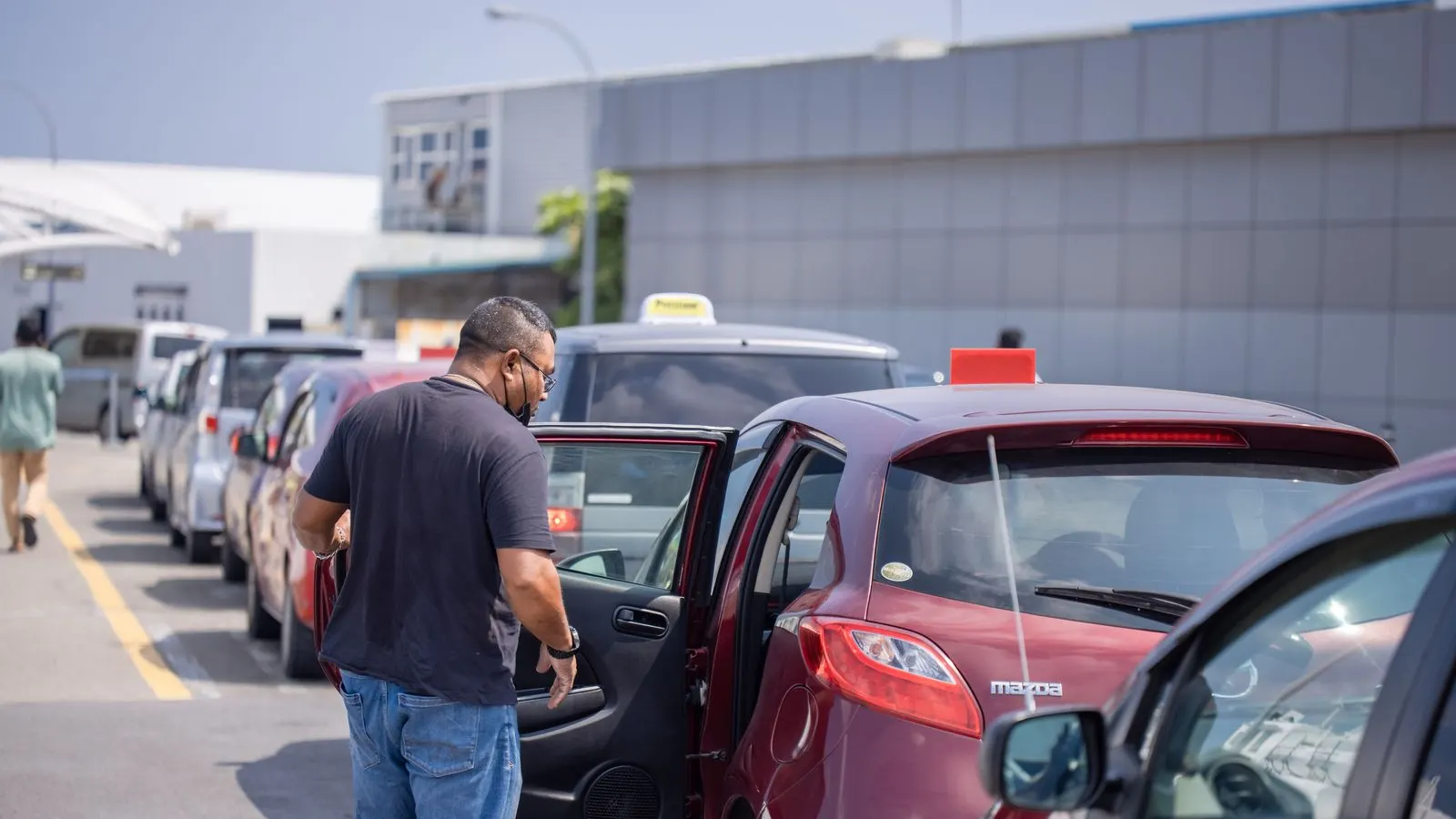
A taxi rank queue at a major airport runs from nothing at 6 am to forty minutes when three wide-bodies land together. The dispatcher who marshals it is doing their best with the cabs available, and when the cabs are not available - a strike, a snowstorm, a football match - the queue becomes the afternoon. A pre-booked chauffeur is in the arrivals hall before you clear customs and the walk to the car is three to five minutes. Over a year of travel the difference is measured in hours, and for a business traveller with a meeting on the other end it is measured in whether they make it. How the chauffeur is positioned is explained in how airport transfers work.
What happens when the flight is late
A taxi does not know your flight exists. Whenever you land, you join the queue that exists at that moment. A pre-booked transfer tracks the flight and the chauffeur's departure moves with it; the waiting allowance starts at actual touchdown. Land three hours late at 1 am and the chauffeur is there at 1 am, at the fare you were quoted. This is the single largest practical difference between the two and it only matters on the day it happens, which is why people underrate it.
Luggage and passengers
A taxi takes what fits, and what fits is often less than you have; a family of four with four large cases and a stroller does not fit a standard saloon taxi and may wait for a larger one. A pre-booked transfer is sized at booking: sedan for two with bags, SUV for four, Sprinter for up to fourteen. Child seats are fitted in advance; taxis rarely carry them and in most jurisdictions are exempt from the requirement, which is a legal nicety that does not make the child safer. The fleet page shows capacities.
Vehicle and driver
The taxi is whatever is next: a clean hybrid or a tired saloon with a cracked seat, driven by someone who has been on shift eleven hours or someone who has just started. The pre-booked transfer is the vehicle you selected, prepared before the job, driven by a chauffeur assigned the night before and trained for the work; the what is a chauffeur article describes the difference. In most cities the taxi driver is licensed and honest and the ride is fine. In some, the airport taxi is where the city's least scrupulous drivers work, because the passengers are tired, foreign and will never come back to complain.
Payment and receipts
Taxis take cash and, increasingly, cards; the receipt is a printed slip or nothing. A pre-booked transfer is charged to the card on file or invoiced to a corporate account; the receipt is emailed with the company name, the route, the date and the cost centre. For anyone who expenses travel, this is the difference between a two-minute expense claim and an argument with finance.
Privacy and security
A taxi driver knows where you are staying and, from the conversation, often more. A chauffeur is bound by the operator's confidentiality rules and does not discuss passengers. For executives, public figures, families with security concerns and anyone travelling with valuables, this is a material reason to pre-book. The operator also knows exactly who drove you, which the taxi rank does not record.
When the taxi wins
- A solo traveller with one bag, no deadline, a short ride, in a city with cheap, honest, plentiful taxis - Singapore, Tokyo, Dubai, Vienna.
- A spontaneous arrival with no time to book. Some transfers can be arranged with two hours' notice, but the rank is there now.
- A very short hop, where the transfer minimum fare is disproportionate.
- A tight budget where the thirty-dollar difference matters more than the queue.
When the transfer wins
- Families and groups with bags, children and car seats.
- Business travel with a meeting on the other end and an expense system to satisfy.
- Late and very early arrivals, when the rank is thin and the city is dark.
- Unfamiliar cities where you cannot judge the taxi and do not know the route.
- Long transfers - resort coasts, country hotels, second cities - where the fixed fare is well below the meter.
- Anyone who has once been in the wrong taxi in the wrong city.
The middle option: the app
The premium rideshare tier sits between the two on most measures and is compared in detail in chauffeur service vs Uber Black. It is cheaper than the transfer on a quiet day, requires you to find the pickup zone, which at many airports is a long walk, and is subject to surge when it is busiest. It is a fair choice for the same situations as the taxi.
Cost over a year
A traveller who does twenty airport arrivals a year and pays an average of US$70 extra for a pre-booked transfer spends US$1,400 more than they would in taxis. For that they get roughly ten hours of queue time back, twenty receipts that go through expenses cleanly, no surge, no late-night rank, and a chauffeur in the hall every time. Whether that is worth it is a personal calculation; for most business travellers and most families on a two-week holiday, it is. The chauffeur cost guide has the fare bands for every region, and the airports page lists the hubs we serve. Booking takes two minutes in the booker, with the flight number, and the fare is fixed before you fly.
Where to find the taxi rules for your airport
Every major airport publishes its taxi arrangements - the rank locations, the flat or zone fares, the licensed operators - on its own website, and it is worth reading for any airport you do not know. Heathrow's and JFK's pages set out the flat fares and the rank locations by terminal; Changi's explains the surcharge structure that applies to airport pickups; Dubai International's lists the taxi companies licensed to work the rank. If an airport's page warns about unlicensed touts, take the warning seriously; it is there because the airport has had complaints. The same pages explain where a pre-booked chauffeur is permitted to meet passengers, which is the reference for the instruction you receive from dispatch.
Security screening on the way home
The comparison so far is about arrivals. On departures the relevant difference is the pickup time. A taxi is called when you are ready; a transfer is booked for a time calculated backwards from the flight using live traffic, the terminal, and the published screening times - in the United States the TSA publishes checkpoint wait estimates by airport, and the IATA baggage guidance is the reference for what can go in the hold. The booked pickup is earlier than most passengers would choose for themselves and later than the anxious would; it is calculated, and it removes the argument.
A dispatcher's honest summary
The taxi rank is a good product in most of the world's big cities and a poor one in a few. If you are travelling alone, lightly, without a deadline, in a city where the rank is good, take the taxi and spend the difference on dinner. If any of those conditions fails - you have bags, children, a meeting, an unfamiliar city, a late flight or a bad experience behind you - the transfer is worth its premium, and the premium is smaller than it looks once the meter, the tip and the queue are counted. That is the calculation the booker lets you make with a fixed number in front of you.
Two examples
A consultant landing at Heathrow at 7 am with a 9:30 meeting in the City takes the transfer: the queue at that hour is short but the M4 is not, the fixed fare beats the meter, and the receipt goes straight to expenses. A student landing at Changi at noon with a backpack and no plans takes the taxi: it is cheap, clean, quick and there is no queue. Neither is wrong. The point of the comparison is to know which traveller you are on the day.