Guides & questions · 2026-09-19 · 8-minute read
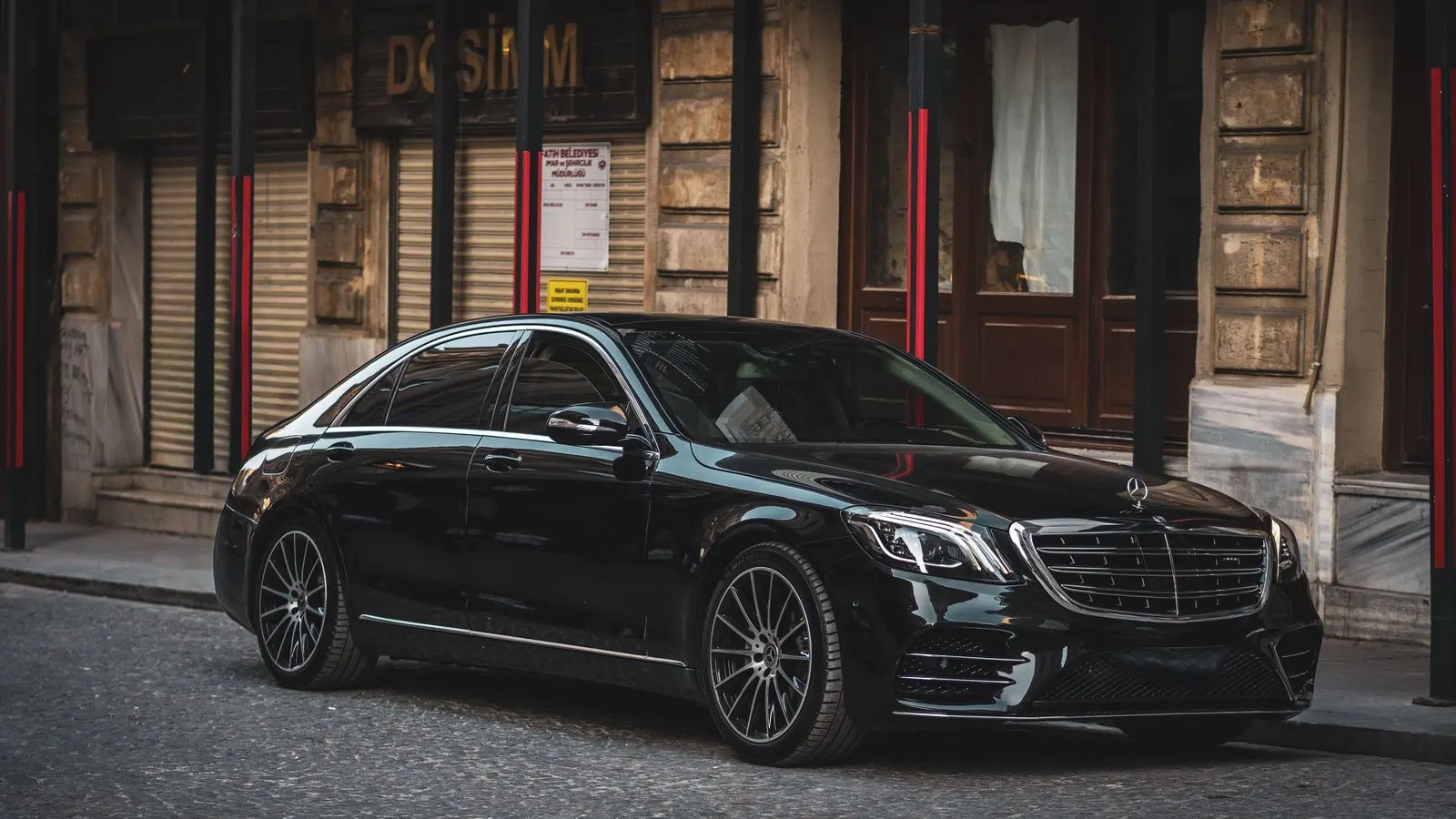
"Black car service" is the American name for what the rest of the world calls a chauffeur service or executive car service, and the name is precise: a black sedan or SUV, a professional chauffeur, a fare agreed in advance. It grew up in New York in the 1970s and 1980s when the yellow cab was unreliable and the stretch limousine was excessive, and it is now the default way business travellers move through most large cities. This article explains what the product is, what it is not, and what to look for when you book one.
A black car service is pre-booked, chauffeur-driven ground transport in an unmarked black sedan or SUV, charged at a fixed fare or an hourly rate agreed before the ride. It differs from a taxi (hailed, metered), a rideshare (app-dispatched, surge-priced, driver in their own car) and a stretch limousine (an event vehicle). Chauffeurs are employed or contracted by a licensed operator, commercially insured and background-checked. Our own version is described on the black car service page.
Where the term comes from
In New York the yellow cab is regulated to be hailed on the street; a different class of licence, the "black car" base licence, was created for vehicles that could only be pre-arranged. The cars were black because the fleets wanted to look uniform and discreet, and the name stuck. The New York model - a base that takes bookings, a fleet of licensed vehicles, chauffeurs who are affiliated with the base - became the template that the Limousine Association International and the industry generally still use. The vehicle is a black sedan by convention, but a black car service will run an SUV, a van or a first-class sedan just as readily; the colour is a signal, not a rule.
What you get
A black car service delivers a small set of things, reliably:
- A vehicle that arrives when it was booked, at the address you gave, clean, with a chauffeur who knows your name.
- A fare you knew before you got in. For transfers a fixed fare; for hourly hire a rate with a minimum. No meter, no surge.
- A chauffeur, not a driver. Someone who is employed to drive passengers professionally, has been background-checked and licensed as such, and has been trained in the etiquette of the job. The difference is explained in what is a chauffeur.
- Commercial insurance. The vehicle is insured to carry passengers for hire, which is not the same as personal car insurance and is the reason a rideshare driver's policy has exclusions you would not enjoy reading.
- Privacy. The car is unmarked. No one at the kerb knows who you are or where you are going.
- A receipt that a corporate expense system will accept without a query.
What you do not get
You do not get a stretch limousine; that is a different product, priced differently, and if you want one the fleet page explains what it is for. You do not get a party; black cars are quiet. You do not usually get a tour guide, though chauffeurs who know their cities will point things out if you ask. And you do not get the cheapest possible price. A black car costs more than a taxi and, on an ordinary afternoon, more than an app car. The cost guide puts numbers on it.
Black car vs taxi
A taxi is a public utility. It is hailed or ranked, metered, and the driver takes whoever is next. It is the right choice for a two-mile hop in a city with honest cabs. It is the wrong choice at an airport when the queue is forty minutes long, when you have four bags, when you need a receipt with a company name on it, or when you would rather not explain the route. A black car is pre-booked, so the only queue is the one at immigration; the fare is fixed, so the traffic is our problem; and the chauffeur is waiting in the hall, so you are not.
Black car vs rideshare
This is the comparison that matters now, and it deserves its own article - chauffeur service vs Uber Black - but the summary is this. A premium rideshare tier such as Uber Black uses drivers who own their vehicles, are dispatched by an algorithm to the nearest request, and are paid per trip by a platform that sets the price in real time. It is good on an ordinary day in a city where there are many such drivers. A black car service assigns a specific chauffeur to your reservation the night before, positions them for your flight, and charges the fare it quoted. It is good every day, including the ones when the app shows "no cars available" or a surge multiplier. The premium you pay for the black car is the price of the guarantee.
Black car vs limousine
In American usage "limo service" and "black car service" are the same thing, which confuses people who picture a stretch. The stretch limousine is the vehicle with the long wheelbase, the bar and the mood lighting. It is a party or wedding car, priced by the hour with a minimum, and it is rarely used for business. A black car is an ordinary luxury sedan. The Wikipedia entry on the limousine traces the word from the region of Limousin in France to the closed car with a partition; in industry practice today, "limo" nearly always means a black sedan unless you ask for a stretch.
Who uses black car services
The core customer is the business traveller: the consultant on a Monday morning flight, the executive going from airport to meeting to airport, the road-show team with six stops. Corporate travel desks book most of the volume, which is why corporate accounts exist with consolidated billing and preferred rates. Beyond business, the users are families arriving with bags at foreign airports, cruise passengers moving between airport and pier (see cruise port transfers), private-jet passengers moving between FBO and hotel (see private jet and FBO transfers), wedding guests, and anyone who has once stood in a taxi queue in the rain and decided not to do it again.
How chauffeurs are vetted
The distinction between a chauffeur and a gig driver is regulatory as much as cultural. A black car operator is licensed by the city, state, province or national authority to carry passengers for hire; in the United States that licensing is layered across city commissions and state departments, and the federal Department of Transportation sets the baseline for commercial vehicles. Chauffeurs hold the commercial endorsement their jurisdiction requires, pass a criminal background check and a driving-record check, are drug-tested where the law requires it, and are trained by the operator in the job itself: the meet-and-greet, the luggage, the route planning, the discretion. The vehicle is inspected on a schedule and carries commercial passenger insurance. None of this is visible from the back seat, which is exactly why it matters.
What a black car ride looks like
You book, usually online in the booker, with the pickup address or flight number, the destination, the passengers and bags, and the time. The fare is shown and fixed. The evening before, a chauffeur is assigned. On the day, you receive the chauffeur's name, photo and vehicle by text. The car arrives a few minutes early. The chauffeur greets you by name, loads the bags, confirms the destination, drives. At the other end the bags are unloaded and you go. The receipt arrives by email. For an airport pickup the same sequence applies with a name board in the arrivals hall; the full process is walked through in how airport transfers work.
What a black car costs
Indicatively, a sedan transfer from a major North American airport to the city centre is US$140-270; an hourly booking is US$130-240 per hour with a two-hour minimum; a full day is US$975-1,950. Western Europe is similar; the Gulf, Asia-Pacific and Latin America are lower. The limo cost article has the tables by vehicle and region.
How to tell a real operator from an app in a suit
Since the rideshare platforms added premium tiers, and since every website can put a black S-Class on its homepage, telling the real thing from the imitation takes a few questions.
- Who is the operator? A licensed black car service has a name, a licence number and an address. An "app in a suit" has a brand and a terms page.
- Who is the chauffeur? A black car service assigns a named chauffeur the night before. An app assigns the nearest driver when you request.
- What is the fare? A black car service quotes a fixed fare before you confirm. An app estimates and reserves the right to change it.
- What happens if the flight is late? A black car service tracks the flight and waits. An app charges waiting time or cancels.
- Is there a phone number with a person on it? At any hour.
Our answers to those questions are on the about page, and the network we belong to - the Limousine Association International and LimousineWorldwide.Directory - exists partly so that passengers can check.
Booking a black car anywhere
The value of a global operator is that the answers above are the same in every city. The black car that meets you at JFK is run to the same standard as the one at Changi or Frankfurt, because the same dispatch is watching both. The destinations page lists the cities, the airports page the airports. Pick one, enter your details, see the fare.
The chauffeur's side of the ride
Passengers rarely see the routine that surrounds a black car ride, and it explains much of the price. The chauffeur's day starts an hour before the first pickup: vehicle inspection, a wipe-down inside and out, a check of the water and the tissues, a look at the day's board and the traffic. Each reservation is reviewed for notes - a passenger who prefers silence, one who wants the news on, one who needs the car cooler than most. The chauffeur leaves base against the tracked flight or the agreed time, not a rounded guess, and aims to be on the kerb ten minutes early. Between rides the car is tidied again. At the end of the day the mileage and the fuel are logged and the vehicle is handed over or garaged. A rideshare driver does some of this by choice; a black car chauffeur does all of it because the operator requires it and inspects for it.
Black cars outside the United States
The product is the same everywhere but the name changes. In the United Kingdom it is a chauffeur service or, in the trade, "private hire" of the executive kind, licensed by the local authority and in London by Transport for London. In continental Europe it is a "VTC" in France and Spain, a "Mietwagen mit Fahrer" in Germany, an "NCC" in Italy - all licensing categories for pre-booked, chauffeur-driven hire that are distinct from taxis. In the Gulf it is simply a limousine service, and the vehicles are usually larger. In Japan it is a hire car with a white-gloved driver. Our destinations page lists every city where the product is available under whatever local name it carries, and the standard behind it does not change with the vocabulary.